
A detailed financial analysis document that required Asad to understand my business model in depth. Each iteration added a lot.
James Henry
CEO, LiquiForce


By selecting Speecto, you are aligning yourself with a team that grasps the technology and its implications for healthcare. We mix Product thinking, Engineering skills, and in depth knowledge of usability to deliver solutions that are designed for real world use, not just great demos.
We combine AI engineering, automation strategy, and product thinking to identify where intelligent capabilities can create the most meaningful impact.
We make complex AI technologies usable, valid, and intuitive for real life problems and seamlessly into current tasks.
We automate repetitive processes, streamline information flows, and reduce manual work without adding unnecessary complexity.
We look beyond individual AI features to build scalable, intuitive solutions designed around actual users, workflows, and business requirements.
We prioritize transparency, reliability, security, human oversight, and responsible AI practices throughout the development process.
We design AI features and automation to work with your current applications, APIs, data sources, and technology ecosystem.
The biggest difference was that the AI never felt like it was making decisions for us. It gave our clinicians useful information, clear context, and control over what happened next. That made adoption much easier.
Speecto develops AI-powered healthcare solutions that reduce manual work, make information easier to access, and improve how clinical, administrative, and operational teams interact with healthcare technology. We can integrate intelligent capabilities into existing platforms or build them into new healthcare products, including:
Streamlining workflows and organizing patient information, adding support to care coordination, summarization and reducing repetitive administrative tasks.
Intelligent features to assist in virtual intake, documentation, information retrieval, patient communication and remote care workflows.
AI functions that enable clinicians to make faster and easier data retrieval, documentation and complex data organisation, and to minimise repetitive tasks in workflow.
Intelligent automation for document processing, task routing, administrative workflow, operational communications, and other high-volume processes.
AI and machine learning functions that can detect patterns, bring valuable insights to the surface, summarize complex information, and assist in data driven decision making.
Purpose built AI products including copilots, intelligent search, RAG systems, voice experiences, document intelligence, and workflow automation.
These are the concerns we hear repeatedly from healthcare teams exploring or already implementing AI:
We know we need AI features, but we don't want to ship a black box our compliance team will reject.
Our clinicians don't trust AI recommendations they can't explain and honestly, neither do we.
We built an AI feature, and adoption was near zero after the first month.
We're worried about liability, if the AI is wrong, who's responsible?
Our staff is already using unapproved AI tools on patient data, and we can't stop it; we can only replace it with something safer.
.svg)
We create real-world AI solutions that seamlessly fit into healthcare workflows, enabling teams to save time, locate information more quickly, and make informed decisions.
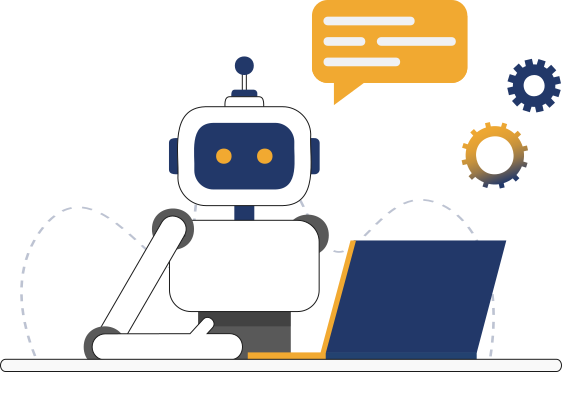
AI-powered assistants that are optimized for clinical documentation, care coordination, or patient support, to draft and suggest, with human intervention always needed for anything related to diagnosis or treatment.
How we turn ideas into solutions
We don't start with “What can AI do here?” We start by identifying where staff burnout, repetitive work, operational bottlenecks, or patient friction are highest. From there, we determine whether AI is actually the right solution or whether a simpler workflow or software improvement would deliver better results.
Not all processes require an AI model. Prior to development, we take an inventory of the user's workflow, available data, potential outcomes, technical considerations, integration needs and risks. This allows to focus on the use of AI features that make sense in the business or clinical context rather than in technology for the sake of technology.
Healthcare users need to understand where an AI-generated recommendation, summary, or output comes from. Wherever possible, we design AI features to surface source data, supporting context, confidence indicators, or reasoning pathways so users can evaluate the information themselves. “Trust the algorithm” isn't an acceptable UX pattern in a clinical environment.
AI should support professional judgment not quietly replace it. We create explicit review and approval processes for workflows related to diagnosis, treatment, clinical recommendation, eligibility, and benefits determination. The system can process information, detect patterns, produce work drafts, and uncover ideas, and maintain qualified persons for taking consequential decisions.
An AI feature only creates value when people actually use it. We build automation on top of existing workflows and systems which healthcare teams rely on such as EHR/EMR systems, administrative systems, patient communication and internal operations. The goal is not to add another disjointed interface, it's to minimize steps and thought load.
AI performance depends heavily on the information feeding it. We assess data availability, completeness, consistency, structure and provenance before using the model outputs. We also engineer suitable checks and error recovery to ensure that non complete or inaccurate data is not written off as an attractive if faulty report.
While AI is rapidly integrating into clinical, administrative and operational processes, it will require more than just selecting a model or technology to do so effectively.
The decisions made by AI, the way users interpret its results, the need for human oversight, and the progression of its performance over time are all factors that healthcare organizations should consider. If these are not in place, no matter how technically proficient AI is, it can generate adoption challenges, workflow inconsistencies, compliance issues, and lack of trust for clinicians and staff.
There is still work to be done for many health systems to establish formal governance, validation, monitoring, and accountability procedures for AI. That is why these considerations are a part of Product Design and not a part of Product Considerations after deployment.
We design AI capabilities that are purposefully grounded in governance, explainability, humans in the loop, suitable safeguards, and quantifiable metrics. We build controls into the architecture and user experience from the first sprint, rather than adding them on after an AI workflow has been established.
.svg)
We assist healthcare organisations to get past the stage of AI experimentation and bring new technology to life in a secure and effective manner. Combining AI engineering, healthcare workflow design, data intelligence, systems integration, and responsible automation.
Convert complex clinical and operational information into meaningful, readily understood information. AI can support decision making by allowing users to be more informed about what they need to consider when accessing information, recognizing patterns, identifying priorities, and making more informed decisions, while still maintaining the proper involvement of health care professionals in the decision making process.
Eliminate manual and repetitive tasks that can be automated and time consuming. Intelligent Automation can decrease the manual efforts, increase consistency and enable the healthcare teams to concentrate on higher value activities to improve data extraction practices, information classification, routing, summarization, task prioritization, and workflow triggers.
Create AI assistants that are tailored to specific healthcare workflows. These solutions can be used to help the clinician, administration and operational teams retrieve, summarize, document, draft, discover and perform everyday functions, enabling them to work more efficiently while keeping proper human scrutiny.
Develop RAG solutions to connect generative AI to trusted organizational data. Some responses to AI can be informed by internal knowledge bases, procedures, policies, healthcare documentation, etc. which can help improve the relevance of the response and reduce the need for relying on generic knowledge from models.
Convert unstructured healthcare documents into structured information and actionable information. With AI, you can cut down on the manual data entry and document review burden by extracting, categorizing, organizing, and summarizing data from clinical documents, reports, referrals, forms, notes, and more.
Use machine learning and deep analysis to discover significant trends in healthcare and operational data sets. Predictive capabilities can facilitate prioritization of information, uncover potential threats, uncover anomalies, predict trends, and highlight actionable signals that aid in proactive planning and decision making.
Organize data and information from multiple systems and data sources to provide more meaningful insights. Data intelligence leveraging artificial intelligence can help structure unstructured information, discover connections between data sets, provide summaries of critical information and make the relevant information more accessible and easier to understand for clinical and operational staff.
Provide healthcare teams quick access to relevant information within large datasets. In addition to traditional keyword-based search, semantic and natural language search functionality can be used to find policies, procedures, clinical information, operation documentation and internal knowledge.
See how we help healthcare organizations solve complex product and technology challenges with practical, scalable solutions built around real clinical workflows


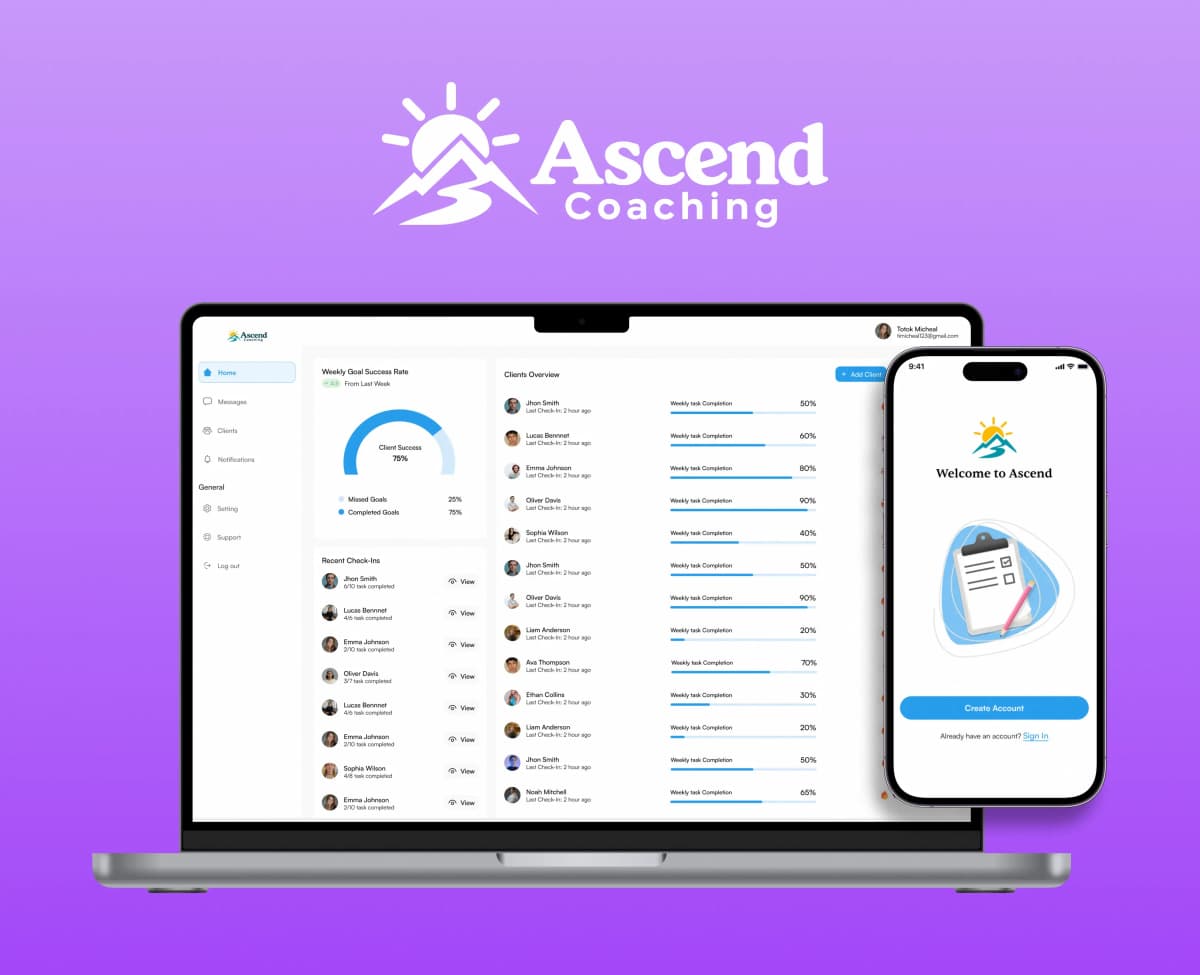
AI is at its best when it addresses a particular problem, rather than just being implemented because it's fashionable to do so. We target areas that can be made more efficient and where smart automation can lessen workload, gain access to information and make every day of healthcare operations more efficient.
Reduce time spent on documentation, information searches, summaries, and other repetitive tasks that take attention away from higher value clinical work.
Automate routine administrative processes such as data extraction, document processing, classification, routing, and workflow updates.
Help teams quickly find relevant information across patient records, internal knowledge, policies, reports, and other approved data sources.
Use intelligent automation to simplify multi-step processes, reduce unnecessary manual work, and keep information moving between teams and systems.
Usually not for most use cases. Most healthcare AI features today are built on top of foundation models (not trained from scratch), which significantly lowers the ongoing maintenance burden. We'll be upfront if your use case is the exception.